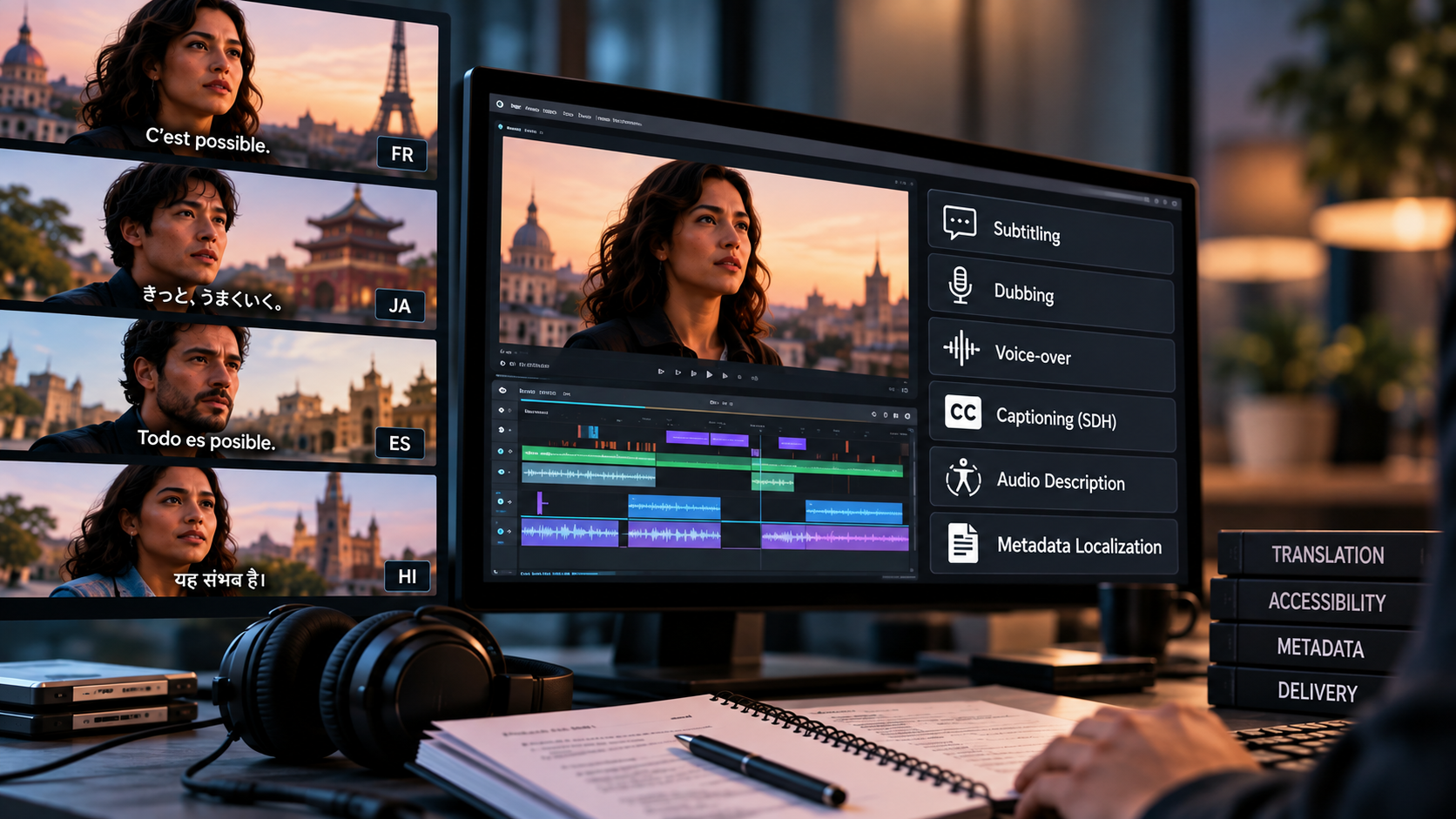
A film can be perfectly dubbed, flawlessly subtitled, and still be invisible to the audience it was localized for. The reason is rarely the dialogue. It’s the title, the synopsis, and the handful of keywords that determine whether anyone finds the content in the first place.
Metadata localization doesn’t get the attention subtitling and dubbing do, mostly because it’s invisible when it works and only noticed when it fails: as a confusing title, a synopsis that misrepresents the genre, or a catalog entry that simply doesn’t come up in a search it should.
The Discoverability Problem
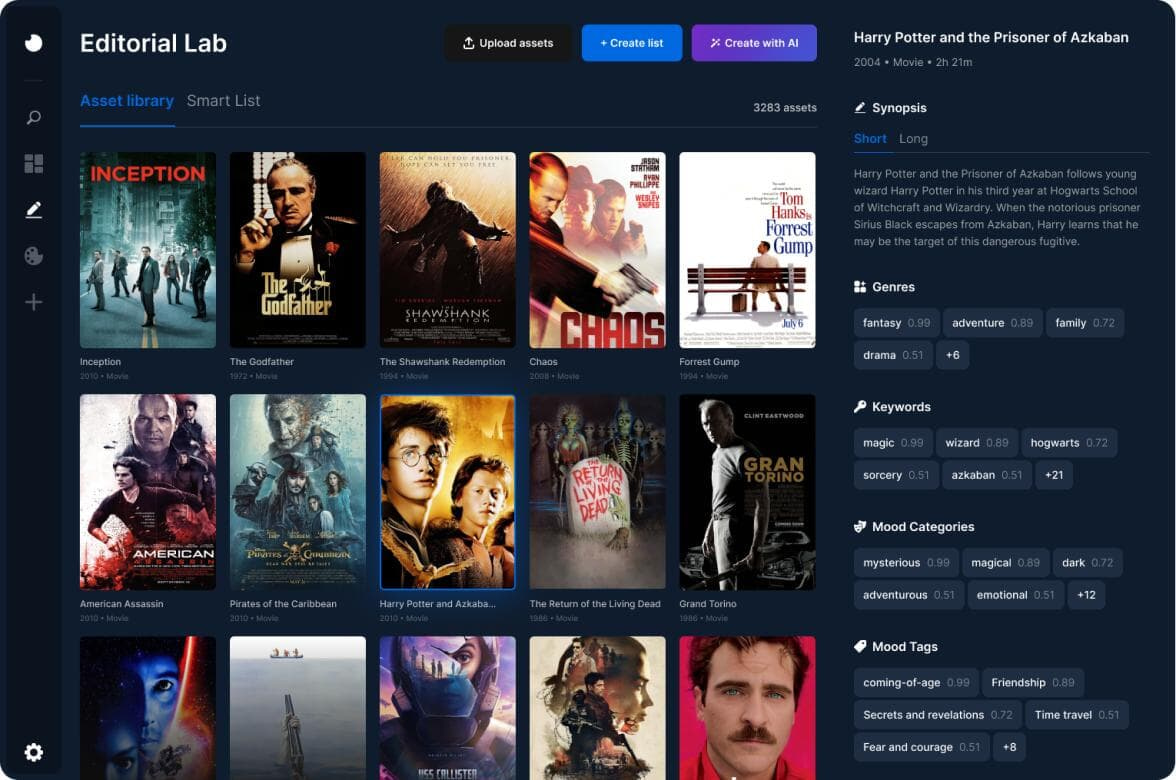
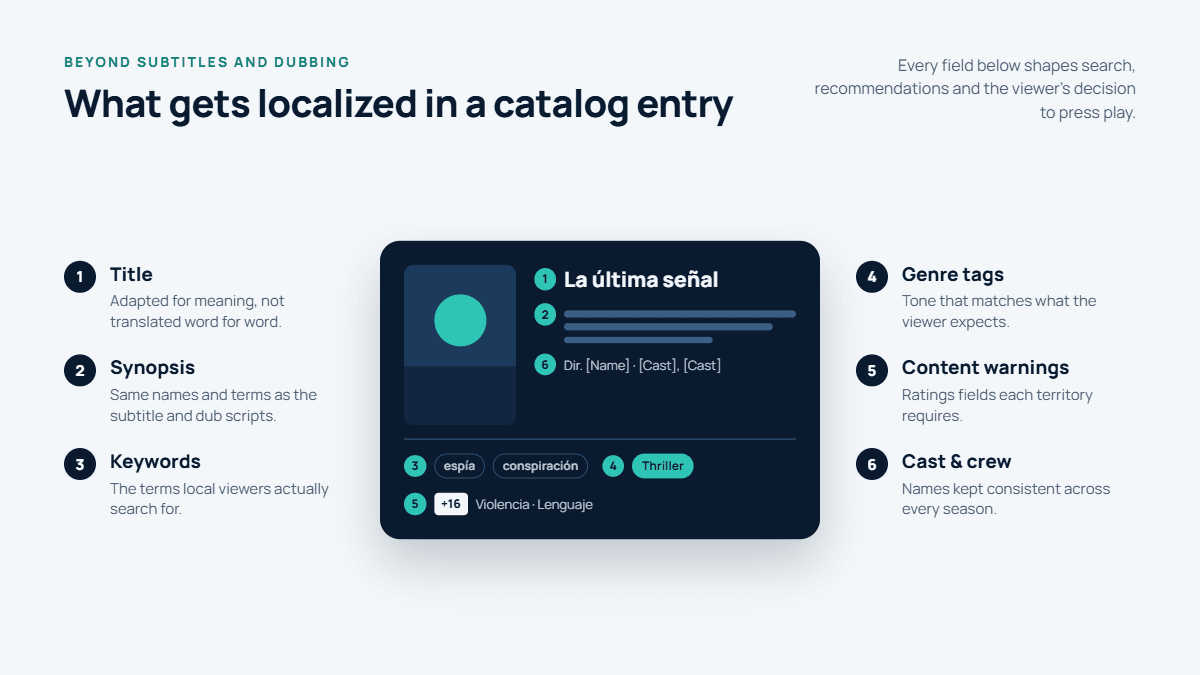
Streaming platforms and broadcasters rely on metadata (titles, synopses, keywords, genre tags, content warnings, cast and crew information) to power search, recommendation, and catalog browsing. A viewer doesn’t scroll through dialogue to decide what to watch. They read a synopsis, scan a few keywords, and make a decision in seconds.
If that metadata hasn’t been localized with the same care as the content itself, the content is effectively harder to find, even if every other part of the localization was done well. A platform’s recommendation engine can only recommend what it understands, and it understands content largely through its metadata.
Why Metadata Can’t Just Be Translated Literally
A title built around wordplay in the source language often doesn’t survive literal translation. The joke, reference, or double meaning disappears, and what’s left can be flat or confusing. Adapting a title well sometimes means moving further from the literal words to stay closer to the actual meaning.
Synopses carry a similar risk. A synopsis translated without reference to the subtitle or dub script can end up using different terminology for the same characters, places, or concepts; inconsistencies that are jarring for an audience, even if neither piece of content is individually “wrong.”
Genre and tone matter too. A synopsis that reads as a straightforward thriller description in the source language can come across as overly dramatic, or not dramatic enough, depending on how directly it’s translated by misrepresenting what kind of content a viewer is actually choosing.
The Catalog Problem at Scale
For a single title, metadata inconsistency is an annoyance. For a library with hundreds of episodes across multiple seasons, languages, and territories, it compounds into a real operational problem.
Character names that shift between episodes. Keywords applied inconsistently across a franchise. Synopses written by different translators over time, with no shared glossary, drifting further apart with each new season. None of these individually breaks the catalog, but together they make it harder to manage, harder to search, and harder for audiences to trust.
Where Metadata Localization Actually Fits
Metadata localization works best when it’s informed by the same terminology and tone decisions already made for subtitling and dubbing; not handled afterward by a disconnected team working from the source material alone.
That means character names, recurring phrases, and tone decisions made during subtitling or dubbing should carry directly into the synopsis, the keywords, and the catalog entry. Treating metadata as a separate, later task is exactly how the inconsistencies described above happen in the first place.
The eSteno Approach: Metadata as Part of the Localization Process, Not an Afterthought
At eSteno Media Services, metadata and synopsis localization are handled as part of the same process as subtitling, dubbing, and translation:
- Titles, synopses, and keywords localized with reference to the same terminology decisions used in subtitling and dubbing.
- Catalog-level consistency management across multi-season, multi-language libraries.
- Metadata QC built to catch the kind of drift that only shows up at scale.
Localized content only works if audiences can find it. Metadata is how they do.
Connect with eSteno Media Services to talk through metadata and catalog localization for your content library.
Frequently Asked Questions
1. What is metadata localization in media and streaming?
Metadata localization is the adaptation of titles, synopses, keywords, genre tags, content warnings, and related catalog information into a target language and market; distinct from subtitling or dubbing, which localize the content itself.
2. Why does a translated synopsis matter if the content itself is already dubbed or subtitled?
Audiences typically decide what to watch based on a title and synopsis before engaging with the content itself. If that metadata is poorly localized, viewers may misunderstand what the content is, or never find it at all, regardless of how well the dubbing or subtitling was done.
3. How does metadata affect whether viewers can find content on a streaming platform?
Search and recommendation systems rely heavily on metadata to understand and surface content. Thin or inconsistent metadata makes it harder for these systems to match content to the right audience, even when the content itself is high quality.
4. What happens if metadata translation is inconsistent across a TV series or franchise?
Inconsistent character names, keywords, or terminology across episodes or seasons creates confusion for viewers and makes catalog management harder internally; particularly at scale, across multiple languages and territories.
5. Who should handle metadata localization: the same team doing subtitling and dubbing, or a separate vendor?
Ideally, metadata localization is informed by the same terminology and tone decisions made during subtitling and dubbing, which generally favors a coordinated process over a fully separate, disconnected vendor relationship.
6. Can a title be translated literally, or does it need adaptation?
It depends on the title. Titles built around wordplay, idiom, or cultural reference often don’t survive literal translation and require adaptation to preserve the intended meaning or tone rather than the exact words.
7. Does metadata localization include content warnings and ratings information?
Yes, metadata localization typically covers the full set of catalog fields relevant to a market, which can include content warnings, ratings-related information, and other fields required for compliance or platform standards in a given territory.
8. How much does metadata localization cost compared to subtitling or dubbing?
Metadata localization is typically a smaller scope of work per title than full subtitling or dubbing, since it covers a limited set of text fields rather than an entire script, though cost depends on catalog size, language count, and whether new metadata needs to be created versus translated.
9. What’s the biggest mistake studios make with metadata localization?
Treating it as a translation task handled separately and later, by a different team than the one making subtitling and dubbing terminology decisions, which is exactly how inconsistencies and discoverability problems happen.
10. Does metadata localization need to be updated when content is re-released or re-licensed?
Often, yes. Changes in distribution territory, platform, or licensing can come with new metadata requirements or fields, and existing metadata should be reviewed rather than assumed to still be accurate or complete.