Audio description still has a branding problem. Too many teams treat it as the last accessibility asset—something added once the master is locked and deadlines are already closing in. But the industry is changing. Accessibility is increasingly becoming part of release readiness, and audio description is part of what makes a title truly finished.
That shift is no longer theoretical. In 2026, India introduced OTT accessibility guidance with phased implementation paths for features including closed captioning and audio description. The broader message matters even more than the territory itself: accessibility is moving upstream. Platforms increasingly expect teams to plan for it, not retrofit it later.
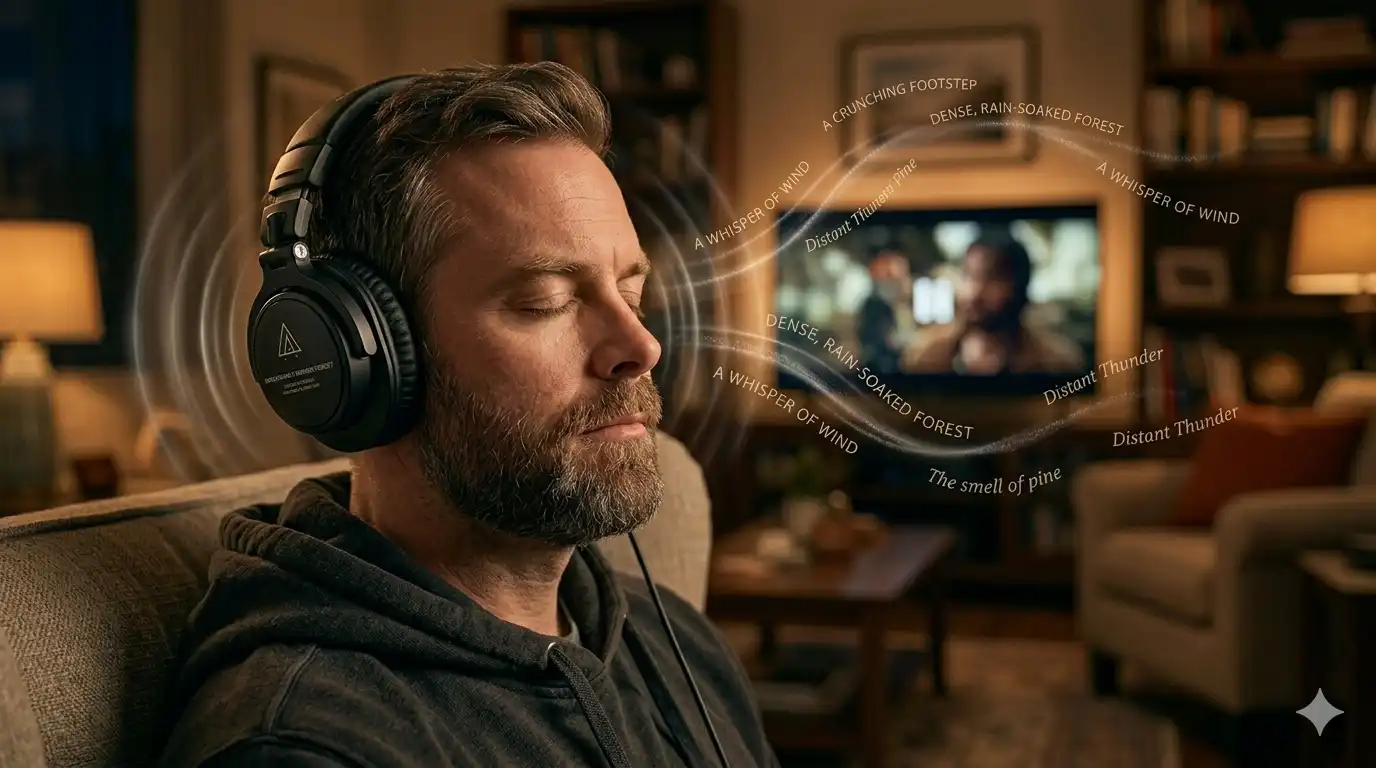
Audio description is not filler. It gives blind and low-vision audiences access to the visual language of a story: the glance that changes a relationship, the silent reveal, the action unfolding beyond dialogue. If captions help audiences follow words, AD helps them follow the world.
The challenge is timing. When AD starts too late, every line competes with dialogue, pacing, music, and mix constraints. That is when description becomes rushed, mechanical, or inconsistent—not because teams lack skill, but because the workflow was never designed to support it.
A stronger approach is to build AD into release planning from the beginning:
- Define the AD style early: cinematic, neutral, sparse, or highly descriptive.
- Flag scene types requiring extra care, such as action, montage, comedy, or fantasy world-building.
- Reserve time for writing, voicing, review, and QC.
- Standardize terminology and character references across episodes or seasons.
- Include accessibility review before final delivery.
- Ensure AD-enabled versions are clearly labeled and easy to access on-platform.
When this works well, the result is almost invisible—in the best possible way. Fewer last-minute revisions. Fewer platform escalations. Less operational friction between production, localization, and QC teams. The release simply moves smoothly.
There is also a viewer impact. Audiences who rely on audio description do not want a second-tier experience. They want the same story delivered with the same care. When AD is treated as part of storytelling rather than compliance cleanup, the result feels more natural, immersive, and respectful.
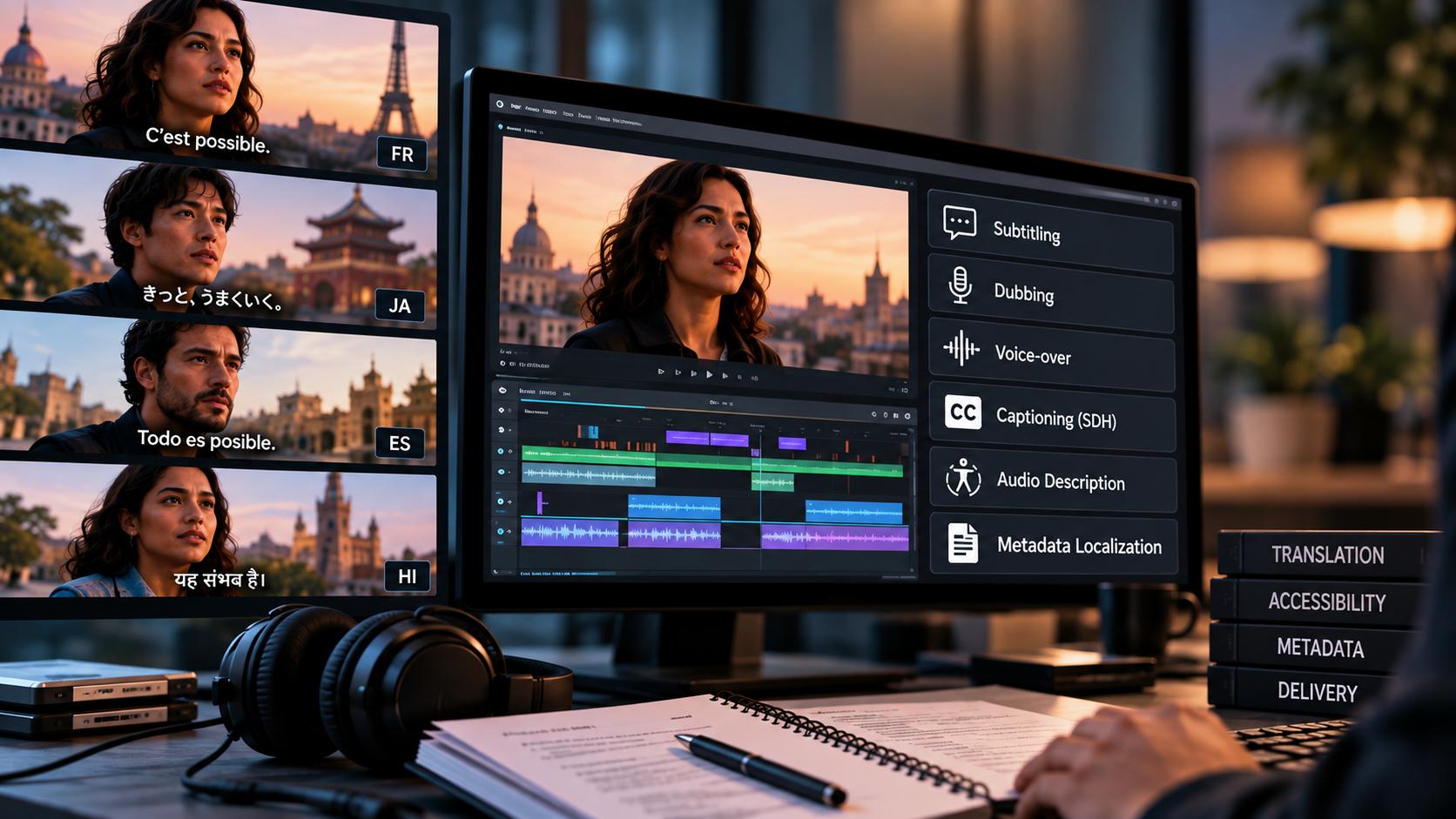
At eSteno, we help content teams integrate audio description into production workflows early—so it works creatively, technically, and operationally:
- AD workflows designed for real production timelines.
- Platform-ready OTT delivery.
- Consistent standards across films, series, and episodic libraries.
- QA processes built for scale.
- Accessibility planning that reduces stress instead of adding it.
If your 2026 slate still treats audio description as a late-stage task, now is the time to rethink the workflow. Accessibility should be part of release confidence—not release chaos.