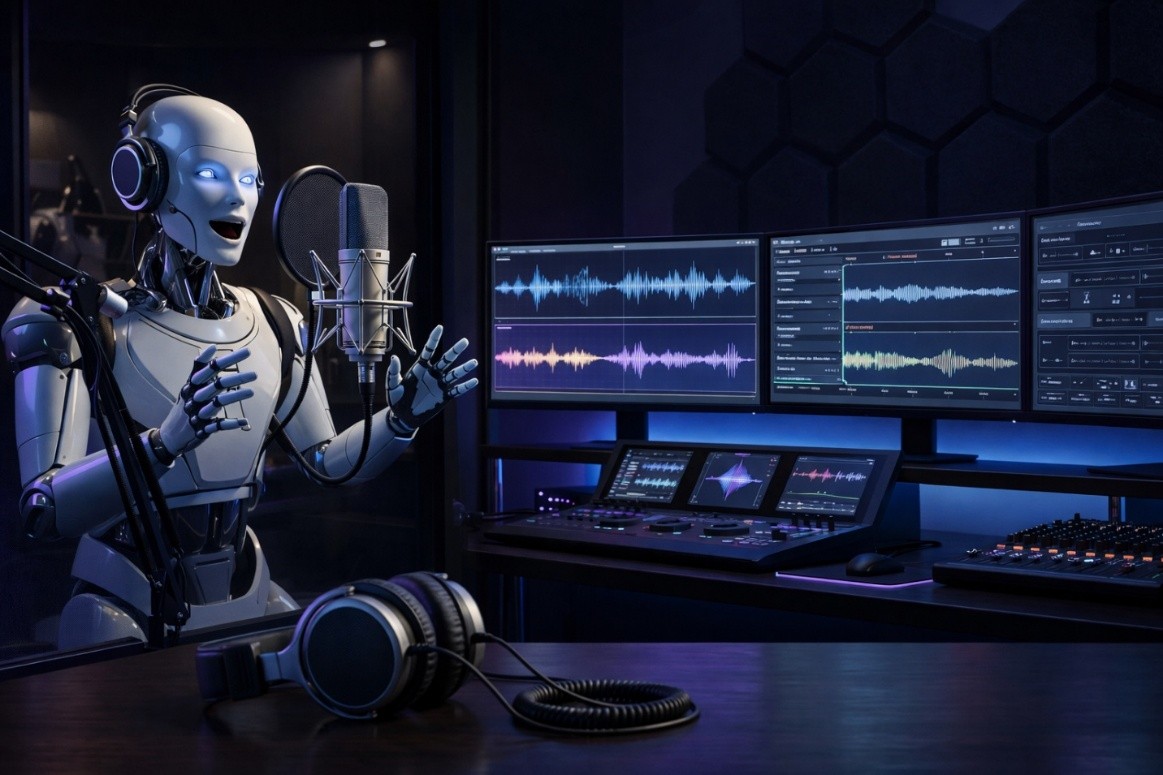
AI voice cloning has moved quickly from experimentation to real production workflows in entertainment localization. For studios, streamers and rights holders, the appeal is obvious: faster turnaround, scalable multilingual versions and the ability to test markets before committing to full dubbing production. But speed alone isn’t the goal. Your audience still expects a performance that feels natural and emotionally authentic. When a synthetic voice sounds flat, poorly paced or out of sync with the screen, viewers notice and the issue quickly becomes more than technical: It becomes a brand problem.
Today the question for content owners is no longer “AI or human?” The real question is where AI-assisted voice production adds operational value without weakening the viewing experience.
Industry research from Slator points to several practical variables that determine success: the type of content, the language pair, lip-sync requirements and the level of human oversight applied across transcription, translation, synthesis and final quality control. For content teams navigating tight release schedules and global audiences, understanding those boundaries is becoming essential.
Where AI Voice Cloning Delivers Real Value
AI voice cloning works best in workflows where speed, iteration and scale matter more than dramatic performance. Studios are already using AI-assisted voices for:
- Early trailers and promotional content
- Internal screeners for international teams
- Market testing in new territories
- Library expansion for large content catalogs
- Last-minute pickups and regional compliance edits
These use cases allow rights holders to move quickly while keeping costs manageable. They also help teams gauge audience interest before committing to premium localization investment. A good example comes from Paramount’s Ananey Studios, which used an AI-assisted platform to create early multilingual trailers for smaller Israeli titles. Those versions helped attract international distributors before full dubbing production was complete.
For large catalogs, this kind of workflow can significantly accelerate commercial decisions. As Slator notes, cloud-based AI localization tools are already shortening turnaround times across the industry.
Where the Technology Still Struggles
Performance-driven content remains the toughest challenge. Emotionally intense scenes – grief, tension, intimacy, anger – depend on subtle elements of human performance: breath control, pacing, hesitation and subtext. Synthetic voices can reproduce pronunciation and tone, but they often struggle to replicate those micro-details that make a scene feel real.
Comedy presents a similar challenge. Timing is everything, and even small cadence errors can flatten a joke. Animation and franchise storytelling raise the stakes further. In these cases, a character’s voice is part of the asset itself. Audiences expect consistency and personality, and shortcuts are far more noticeable.
In other words, some productions can benefit from AI-assisted workflows, while others demand the full depth of human performance.
Why Quality Assurance Is the Real Differentiator
Whether a project succeeds with AI-assisted dubbing often comes down to quality control. A production-ready QA framework should evaluate:
- Pronunciation of names and brands
- Emotional intent and tone
- Dialogue pacing and rhythm
- Speaker consistency across scenes
- Lip-sync tolerance
- Mix quality and technical clarity
- Cultural naturalness in the target language
Miss any one of these factors, and the audience feels it, even if they cannot immediately explain why.
Governance matters as well. Recent industry agreements regarding digital voice replicas emphasize performer consent, compensation and control over how synthetic voices are used. Responsible production now requires clear policies on these issues.
A Practical Approach for Content Teams
For studios and platforms, the question is no longer whether AI will play a role in localization; it already does, but when it makes the most sense to use it. At Steno, we help content teams treat AI voice production as a managed workflow, not a shortcut, by determining when AI-only workflows are sufficient, when hybrid production helps reduce risk, and when full human dubbing is the best choice. With the right framework, studios can move faster without compromising performance quality or audience trust.
If you’re considering AI voice cloning for your next release, the smartest first step is a practical evaluation. Send us a short sample of your content. We’ll review it using a QA criterion, looking at performance sensitivity, audience expectations and brand risk, and recommend the approach that best fits your project.